Knowing how to tell if water damage is old or new can change what you do next, from the repair you need to the insurance claim you can file. At On The Spot Restoration, we help Florida homeowners answer this question every week, from Daytona Beach to Palm Coast.
Old and new water damage look different. New damage is usually damp, dark, and soft. Old damage is typically dry, ringed, and sometimes crumbling. However, looks alone can’t give you an exact date.
In this guide, we’ll show you the signs of each, a side-by-side comparison, and how to check whether a leak is still active. We’ll also explain how professionals confirm the age of damage, so you know when it’s time to call.
Key Takeaways
- New water damage is usually damp, dark, and soft. Old damage is dry, stained in rings, and often hardened or crumbling.
- Visual signs show whether damage is old or new, but they can’t give an exact date.
- A dry stain doesn’t prove the leak is over. Only a moisture reading confirms whether a leak is still active.
- Old damage can still hide mold and rot, so dry doesn’t mean harmless.
- Insurers treat sudden and gradual damage differently, so the age of the damage matters for a claim.
- A professional inspection gives the most reliable answer.
Why It Matters Whether Water Damage Is Old or New
The age of water damage affects almost every decision you make about it. Here’s why it matters.
- Safety: Is old water damage dangerous? It can be. Old damage often hides mold and weakened materials.
- Repair scope: New damage may only need drying. Old damage often needs replacement, since wet materials have already broken down.
- Cost and timing: Waiting turns new damage into old damage. As a result, repairs usually get bigger and more expensive.
- Insurance: Sudden and gradual damage are treated differently, which we’ll cover below.
Does old water damage need to be repaired? In most cases, yes. Even if the leak stopped long ago, damaged drywall, wood, and insulation can still cause secondary damage, including mold.
Signs of New Water Damage
New water damage is usually easy to feel as well as see. Because the water is recent, materials are still wet. Look for these signs:
- The area is damp or wet to the touch.
- The stain is dark and evenly colored, with soft, blurry edges.
- There’s no dried ring around the edge yet.
- Drywall, wood, or flooring feels soft or swollen.
- You see fresh drips, bubbling paint, or a sagging ceiling.
- There’s little or no musty odor yet.
If you see these signs, you may have an active leak from a recent event. In that case, speed matters. Stop the water source if it’s safe to do so, then call a professional for extraction and drying.
Signs of Old Water Damage
Old water damage tells a different story. Over time, stains dry out, and materials change. Here’s what to look for:
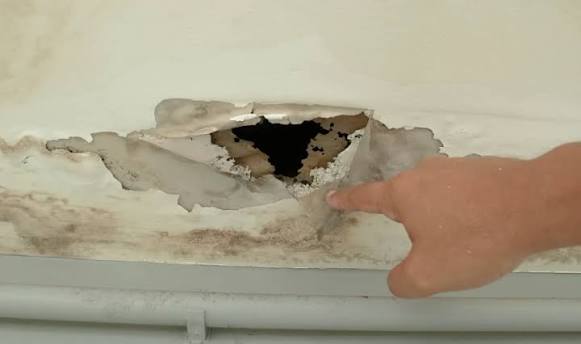
- Brown or yellow rings on ceilings or walls, often with several layers from repeated wetting.
- A dry, crusty, or stiff stain texture.
- Peeling or flaking paint.
- Hardened, brittle, or crumbling drywall.
- Rotted wood that looks dark or feels soft.
- Warped flooring that has stopped moving.
- White, chalky mineral deposits, called efflorescence, on masonry.
- A persistent musty smell, or visible mold colonies.
These signs help show age. For a broader list of warning signs that apply to any water damage, see our guide: What Are the Common Signs of Water Damage?.
Found a Stain You Can’t Explain?
Get a free water damage inspection from the On The Spot Restoration team
— available 24/7 across Florida.
Old vs. New Water Damage: Side-by-Side Comparison
Here’s a quick way to compare old water damage vs. new water damage at a glance.
FEATURE | NEW WATER DAMAGE | OLD WATER DAMAGE |
Color | Dark, even color | Brown or yellow rings |
Texture | Damp and soft | Dry, hard, or crumbling |
Edges | Soft and blurry | Sharp, defined rings |
Smell | Faint or none | Persistent musty odor |
Mold | Rare at first | Common |
Materials | Swollen or sagging | Rotted, warped, or brittle |
Moisture Reading | Elevated | Often normal if the leak stopped |
How to Tell If a Leak Is Still Active
A dry stain doesn’t always mean the leak is over. Some leaks come and go with rain, use, or temperature. Here are a few simple checks:
- Outline the edge of the stain with a pencil, then see if it grows over several days.
- Check the area after rain, since roof and window leaks often show up only then.
- Turn off all water in the home and check whether your water meter still moves.
These checks help, but they have limits. Touch can’t tell you what’s happening inside a wall. A moisture meter can. That’s why a professional moisture reading is the most reliable way to confirm whether a leak is ongoing.
How Professionals Determine the Age of Water Damage
Knowing how to tell if water damage is old or new takes more than a quick look. At On The Spot Restoration, our IICRC-certified technicians combine several tools and clues. Here’s what a professional water damage inspection includes:
- Moisture meters and moisture mapping: These show which areas are wet now and which were wet before.
- Thermal imaging: Cooler, damp areas show up on camera, even behind a painted surface.
- Material condition: Rot, rust on fasteners, and the stage of mold growth all point to how long moisture has been present.
- Documentation: Photos and readings create a clear record of what we found.
One honest note: professionals estimate a range, not an exact date. Even so, a trained inspection tells you far more than stains alone. If you’re in Daytona Beach, Ormond Beach, Port Orange, or Palm Coast, we offer free inspections to help you find out.
Old vs. New Water Damage and Your Insurance Claim
Age matters for insurance. Sudden damage from a burst pipe is more often covered. Gradual damage from a long-term leak usually isn’t. To learn what counts as sudden, see our guide: What Is Considered Accidental Water Damage?.
Adjusters often look for staining, rot, rust, and mold to judge how long damage has been there. As a result, a claim for old damage may be denied as a pre-existing or long-term leak. That’s one of the common reasons claims get denied, which we cover in our guide on why water damage insurance claims get denied.
To protect yourself, document the damage early. Take dated photos, and get moisture readings. Our team can also provide inspection reports that support your claim.
What to Do Next in Each Case
- If the damage is new: Stop the source and call for extraction and drying right away. Acting within 24 to 48 hours helps prevent mold.
- If the damage is old: Get it inspected for mold, rot, and hidden moisture before you repair the surface. Painting over it only hides the problem.
- If you’re buying or selling a home: Get a water damage inspection, so past damage doesn’t come as a surprise. In Florida’s humid climate, old leaks often leave more behind than they appear to.
Helpful reminder: Florida’s humidity can speed up mold growth and rot. Even a leak that stopped months ago may have left hidden problems behind.
How On The Spot Restoration Can Help
We start every job with an inspection. Using moisture readings and thermal imaging, we find the source and estimate the age of the damage. Then our Water Damage Restoration team handles extraction, drying, and repairs for new damage.
When old damage has mold behind it, our Mold Treatment services address the problem at its source. That way, you get a lasting fix, not just a fresh coat of paint. We proudly serve homeowners across Daytona Beach, Ormond Beach, Port Orange, and Palm Coast.
Not Sure How Old the Damage Is?
Our certified team can read the moisture and tell you what’s really going on. Schedule an inspection today.
Frequently Asked Questions
How can you tell if water damage is old?
Old water damage is usually dry and stained in brown or yellow rings. It may look crusty, with peeling paint, crumbling drywall, rotted wood, or a persistent musty smell. Mold is also common. A moisture reading can confirm whether any moisture remains.
How can you tell if water damage is new?
New water damage is usually damp or wet to the touch. The stain is dark and even, with soft, blurry edges and no dried ring. Materials often feel soft or swollen, and you may see fresh drips or sagging.
How do you know if a water stain is still active?
Outline the stain with a pencil and see if it grows over several days. Also check after rain and watch your water meter with all water off. A moisture meter reading is the most reliable way to confirm an active leak.
Is old water damage covered by insurance?
Usually not. Insurers typically cover sudden, accidental damage but exclude long-term or gradual leaks and pre-existing damage. Coverage varies by policy, so check yours or ask your insurer.
Does old water damage need to be fixed?
Yes, in most cases. Even if the leak has stopped, old damage can hide mold, rot, and weakened materials. A professional inspection can confirm how much needs to be repaired or replaced.
Not Sure How to Tell If Water Damage Is Old or New? Let Us Check
The signs in this guide can point you in the right direction. However, a moisture reading gives the real answer. Whether the damage is old, new, or a little of both, our team at On The Spot Restoration is available 24/7 across Florida. Contact us today for a free inspection, and let us help you find out what’s really going on.
Get a Clear Answer, Not a Guess
On The Spot Restoration offers free inspections and transparent pricing across Florida.